
Archive for January, 2010
Take A Sad Song And Make It Better: Apologize.
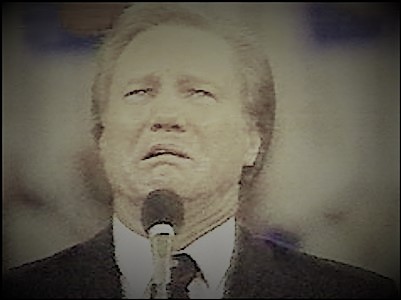
(OK, so it doesn’t work for everybody.)
In the space of roughly 3 minutes during Jay Leno’s 9:00 debut show on September 14, Kanye West effectively transformed himself from a leading candidate for my personal All-Time Celebrity Buffoon award to a guy I suddenly liked way more than I ever did before his Taylor Swift / VMA blunder.
If you’re now scratching your head for an explanation (and I salute your noble disregard of our ever-declining pop culture), Kanye West—on September 13—interrupted teen country singer Taylor Swift’s acceptance speech during MTV’s Video Music Awards ceremony to proclaim Beyonce the rightful recipient of Swift’s award. The good news is, even an MTV audience (never a bellwether of social grace) still recognizes abject egotism when they see it—and promptly showered West with a downpour of angry boos.
Talk about a George Costanza moment: “Was that wrong? Should I not have done that?” Actually, Kanye: No, you shouldn’t have. But so what? We’re talking about a superstar here—why should he care? Or so I thought. I was wrong. The next night, Kanye—who was already scheduled to perform on Leno—asked for a few moments to publicly apologize for his actions. Below is an excerpt of that apology.
“I’m just ashamed that [I] caused someone else’s hurt…And I don’t try to justify it because I was just in the wrong…Period. But I need to, after this, take some time off and just analyze how I’m going to make it through the rest of this life, how I’m going to improve.”
As a longtime observer of public apologies, what I found so extraordinary was this: There’s not even the hint of an excuse in those words. And while the online responses to the apology were overwhelmingly dismissive, I watched the video clip—and I believed him. More importantly, I applauded him.
What I didn’t know, until well after the fact, is that the VMA flap is far from Kanye’s first public ego trip. Still, the point here remains valid: Whether you’re a multiplatinum-selling rapper, a major corporate CEO, or a part-time checker at Burger Doodle, nothing restores a damaged image more effectively than a genuine, heartfelt apology.
Let me put it as simply as possible. When you screw up: Say. You’re. Sorry. And mean it. And don’t ever, EVER, use the word “but”. No matter how well-crafted the reasoning, “I’m sorry, but..” isn’t an apology. It’s an insult.
Which is not to say that extenuating circumstances cannot be incorporated into an apology. They can be—and, in many instances, should be. But not if the net result is a non-apology. Here’s a classic example: After former Alabama Governor Guy Hunt was found, in 1991, to have used the state plane for transportation to multiple preaching engagements that earned him thousands dollars, he issued the following statement: “I made a mistake when I failed to realize how a simple worship service in the practice of my personal religious faith could turn into such a controversy. And for that error in judgment, I am sorry.”
That’s not an apology for royally bilking Alabama taxpayers for his own personal gain. It’s a middle finger for the people who had a problem with it.
Two years later, former Attorney General Janet Reno took full responsibility for the disastrous FBI attack on the Branch Davidian compound in Waco, Texas—which left 75 dead, including 25 children. She stared straight into the cameras and said, “I made the decisions; I’m accountable. The buck stops with me.” She later assured Ted Koppel on Nightline that she would resign if necessary. Had a Presidential election been held the next day, Reno would have won in a landslide.
All that said, there’s no guarantee that an apology—no matter how heartfelt and genuine—will always make everything better. Some people just aren’t willing to forgive—no matter what. The good news for you is, that’s their problem.
Originally published in the Birmingham Business Journal, October 5, 2009
HARE PEOPLE (note 1)
Francis:
On New Year’s Day, I found (carefully stored in a long-unused file drawer) a 1981 R.E.M. 45 RPM single—released on Hib Tone Records, and signed by the entire band. Bassist Mike Mills included a personal note to Martha: “Hi Martha — 404-546-0365”.
Seeing as how I haven’t felt the need to play it in the last 27 years, I listed it on eBay. It sold for $99 to a 20-something entertainment-software sales executive in Los Angeles.
I have not called Mike’s number to see if he still lives there. Lemme know if you do.
Reductio Ad Absurdum
In January 2009, the Birmingham News reported that the Jefferson County Commission was seriously considering a sewer system Non User Fee—to be paid by residents, you guessed it, NOT on the system.
In response, my good friend Tassos Touloupis authored the press release below. When it (shockingly) didn’t generate any coverage, I brought it to the attention of my buddy Jerry Underwood at the Birmingham News—who obviously knows a good story when he sees one!
——————————–
For Immediate Release – March 23, 2009
BIRMINGHAM RESTAURANT TO CHARGE A NON-DINERS FEE
BIRMINGHAM, Ala. – Ted’s Restaurant, with two locations in Birmingham, Alabama, is implementing a Non-Diners Fee for Jefferson County residents who do not eat at Ted’s.
Because of the economic slow-down affecting the entire country, people are not dining out as frequently. Tasos Touloupis, who owns and operates Ted’s with his wife, Beba, had to get resourceful to generate necessary revenue. “I must give credit to the Jefferson County Commission for this idea,” said Mr. Touloupis. “Like everyone else, when I first heard the Commissioners wanted to charge a ‘Non-Users Fee’ to Jefferson County residents who do not use the sewer system, I thought they had eaten some bad fried green tomatoes. But when I found out they were serious, I saw the genius of the proposal.”
Ted’s Non-Diners Fee will work like this: Ted’s will maintain a record of customers. At the end of each month, Ted’s will send a $12 NDF Invoice to any Jefferson County resident who did not eat at Ted’s during the month. Diners may eat at either Ted’s location (328 12th St South or Ted’s To Go at 1801 4th Ave South) for an exemption. To encourage cooperation, Ted’s will give a free meal to those paying an NDF Invoice in person. Though lines at Ted’s can be long during peak hours, they move fast — not like at the courthouse.
In these extraordinary times, this is a necessary new policy. By eating at Ted’s, diners pay the salaries of waitresses, cooks and other staff. They keep utilities running. They pay the suppliers of fresh vegetables and savory meats. After paying the multiple taxes, licenses and other government fees required of restaurants, there sometimes is a little left over for the owners and their children. “But it hurts everyone when diners start brown-bagging it too much for lunch,” said Mr. Touloupis. “Besides, excessive use of brown bags means trees have to die, so the Non-Diners Fee is good for the environment.”
Ted’s Non-Diners Fee will begin effective April 1, 2009, in Jefferson County. If necessary, Ted’s will extend the Non-Diners Fee to Washington, D.C., later this year.
Ted’s is a family-owned and operated restaurant. They don’t serve fast food — just good food, fast.
###
For More Information:
Tasos Touloupis 205-266-0715 info@tedsbirmingham.com
QUOTATIONS
“Writing is easy. You just sit at your typewriter and concentrate until beads of blood form on your forehead.”
—George Axelrod, 1922 – 2003
“If you have any young friends who aspire to become writers, the second greatest favor you can do them is to present them with copies of Elements of Style. The first greatest, of course, is to shoot them now, while they’re still happy.”
—Dorothy Parker
“If they laid all the coeds from Yale end to end, I wouldn’t be a bit surprised.”
—Dorothy Parker
The surest sign that intelligent life exists elsewhere in the universe is that it has never tried to contact us.
—Bill Watterson (Calvin and Hobbes)
Don’t Just Make Sales. Create Experiences.
This past Christmas, my wife decided she wanted a night away from the house, instead of a “thing”—so we booked a room at Aloft for Friday, January 8th.
On Tuesday the 5th, I received an HTML email from Aloft Birmingham Soho Square—which read, in part, “Aloha Francis! Are you ready to a-go-go? Your aloft adventure is coming up, and we can’t wait to amuse you with an amazing, one-of-a-kind experience. Soon you’ll see for yourself why everyone’s all abuzz about Aloft Birmingham Soho Square.”
The message included our reservation confirmation, check-in-and-out times, a 7-day weather forecast, and links to nearly every page on the hotel’s website. All of which inspired two immediate reactions: 1) “Wow, that is really neat how they just made my upcoming visit feel a lot more special,” and 2) “How easy was that.” After all, they only had to set-up an initial HTML template; after which, creating a special customer experience with every patron is literally as effortless as sending an email.
Which then led me to two additional thoughts: 1) How many of us—my own shop included—are missing easy opportunities to create special experiences with our clients or customers?, and 2) Whether you’re a privately-held marketing communications firm or a multi-national manufacturer, in year-2010, you’re in the Relationship Marketing business. And when you frame it as Relationship Marketing, suddenly all those intimidating new marketing tactics—especially Social Media—become a lot less intimidating.
It’s been said thousands of times before this column: Today’s consumer controls the buying process like never before. And as my friend Richard Wallace of Organizational Success Management recently told me, “Consumers don’t like to be sold, but they love to buy.”
Everybody loves a great deal, but what we really love is getting a great deal from someone we really like. Which is the whole point of relationship marketing: Making people like you—and trust you—enough to become customers or clients. Then making them like you enough to tell others.
Several years ago, I bought a record at cdbaby.com. Within minutes of my order, I received the following confirmation email:
Thanks for your order with cd baby! Your CD has been gently taken from our CD Baby shelves with sterilized contamination-free gloves and placed onto a satin pillow. A team of 50 employees inspected your CD and polished it to make sure it was in the best possible condition before mailing.
Our packing specialist from Japan lit a candle and a hush fell over the crowd as he put your CD into the finest gold-lined box that money can buy.
We all had a wonderful celebration afterwards and the whole party marched down the street to the post office where the entire town of Portland waved ‘Bon Voyage!’ to your package, on its way to you, in our private CD Baby jet on this day, Friday, July 12th.
I hope you had a wonderful time shopping at CD Baby. We sure did. Your picture is on our wall as ‘Customer of the Year’. We’re all exhausted but can’t wait for you to come back to CDBABY.COM!!
I’ll bet I’ve forwarded that email to 300 people or more. Now I’ve published it in the BBJ. And you know what? My CD was delivered promptly, and in perfect condition. Which leads to another obvious point about relationship marketing. About all marketing, for that matter: You have to follow-through on your promises.
Which, unfortunately, the folks at Aloft didn’t do. Don’t get me wrong, we had a great stay. But when I sent back a “loved my email” Reply, the original sender’s address turned-out to be GCCUSTSERVICE@info.starwoodhotels.com—which certainly doesn’t sound like a real person—and my message to them generated an Autoreply which read, in part, “Not all requests can be handled by email.”
Worse still, after our stay, I was placed on Starwood’s Spam list—and in less than three weeks after my visit, I received three unsolicited sales emails. Which leads, more or less, to the final important point of relationship marketing: People in relationships need their space—so don’t overdo it.
Originally published in the Birmingham Business Journal February 26, 2010.
Dome And Dumber, or Return To Larryland.
There is a pivotal scene in the 1984 mockumentary classic “Spinal Tap”—the comic history of a band’s slow decline from second-rate psychedelic hucksters to fourth-rate thud-rock has-beens. The band’s members are discussing ideas for rebounding from yet another career low, when someone roars, “I’ve got it!—Let’s bring back ‘Stonehenge!!’” (an atrocious rock opera Spinal Tap had originally recorded a decade earlier).
It’s a scene that has stuck in my mind ever since a day in early 2006. I was returning to Birmingham after an afternoon in Chattanooga, during which the Executive Director of that city’s Community Foundation had spent nearly two hours showing-off his city’s many accomplishments over the past decade—while also pointing out about a half-dozen civic projects underway; all as large or larger than, for instance, the Railroad Park, a project which (IMHO) offers more potential for impacting our own City Center’s quality of life than any proposed in decades.
When I reached Birmingham radio reception range, one of the evening’s top news stories involved yet another effort to garner support for the domed stadium originally proposed well over two decades ago.
Which is when it hit me: The dome has become Birmingham’s own personal “Stonehenge”. Much as it’s been romanticized as Future Birmingham’s proverbial grail, it was a starry-eyed idea in the first place. And if you ask most taxpayers, it’s one that has decidedly not improved with age. Consider, for starters, the cost—which is currently projected to be $530 million. Assuming Birmingham manages the all-but-unprecedented task of staying on budget, that price is only the beginning. Here’s where it could get really scary.
According to the Wall Street Journal’s December 29 Yield Curve Scale chart, 20-year municipal bond rates for AA-Rated cities (which, amazingly, is Birmingham’s rating, according to acting Mayor Roderick Royal) were 4.87%. Plug the principal and interest into Bloomberg’s online Mortgage Calculator, and suddenly the price tag jumps to roughly $830,355,090. And that’s not counting all the fees involved in originating and issuing the bond—not to mention the additional tab for operating, maintaining and (equally important) marketing the facility, once it’s actually open.
All of which could easily add-up to a total taxpayer burden of $900 million—or an average annual payout of $45 million over the next 20 years. Now, consider arguably the single biggest revenue-producing event that a dome-equipped Birmingham could hope to attract: The SEC Championship game—which seems to be doing quite well in Atlanta, thank you very much, and last year generated an economic impact of $25 million. In a town where there are a lot more places to spend money than Birmingham. And remember, “economic impact” doesn’t remotely equate to profit.
Forget the obvious question (Namely: How’s the dome ever going to pay for itself?). Proponents have long claimed its primary draw will be as a convention destination. Forget the various reports of declining tradeshow attendance in cities across the country—including a lot of towns (most notably Las Vegas) light-years up the convention / tourism food chain from Birmingham. Where’s the wisdom in spending 900 million taxpayer dollars on something we hope will be used primarily by folks who don’t even live here? And where’s the direct impact on our own quality of life?
Place that potential $900 million tab against the $12 million public outlay for the Railroad Park—which will feature 10 acres of open lawn, walking trails and shaded pavilions, in addition to a lake and an open-air amphitheatre. That makes the dome 75 times more expensive than a project we can all but guarantee will be used by folks who do live here.
Put another way, how much more could Birmingham benefit from 74 other projects as appealing as the Railroad Park, than we would from a single dome? Here’s an even better idea: Let’s identify maybe a half-dozen other practical civic projects, save the taxpayers $816 million, and file the dome—once and for all—in its rightful place: Alongside “Stonehenge” in the cutout bin.
Originally published in the Birmingham News Editorial section, Sunday January 3, 2010
How Are You Taking Advantage Of The Economic Slowdown?
If you’ve been around the proverbial block before, you know the economy’s bound to get rolling again. Eventually. So what are you doing, in the meantime, to position your company for long-term growth?
Here at the international corporate headquarters of Hare Communications, we’re revamping our brand. Starting with a new core messaging strategy. One that’s still accurate to our brand, but much more in tune with the current mindset of the business world. Which is not to say that we’re casting our lot with a mood that’s likely to lighten, once the economy picks up again. Rather, we’re speaking more directly to what we believe will be a permanent legacy (at least in our lifetime) of this recession: An absolute focus on value.
Thanks in part to the slowdown, consumers have become smarter, and better informed, than ever. And while your brand in the marketplace is arguably more important than ever, if that brand doesn’t somehow evoke a clear sense of value, take a look down the street. Because sooner or later, that’s where you’re likely to find your customers.
That said, if you’ve never consciously sat down to explore what your company’s brand really is, there’s never been a better time to do it. Particularly if the slowdown has given you more free time than you enjoy having.
Just in case you’re wondering, “exactly what IS a brand?”…Basically, it’s what comes into your mind when you think of a company or product. So, what comes to mind when people think about you? It’s a good question to start the ball rolling. And don’t just ask yourself that question. Ask others.
The ideal finding of a thorough brand review should be that your external brand (how others perceive you) is consistent with your internal brand, and within reach of your brand aspiration (how you perceive yourself, and how you hope others perceive you). If your research indicates there are serious disconnects, it’s time to consider re-branding—or, at the very least, making the structural changes necessary to bring your organization’s internal, external and desired brands into alignment.
Once you’ve made those necessary changes, you’ll need a tactical plan to present that new message to the marketplace. Which starts with a coordinated analysis of your customer base (existing and prospective) and your budget. Not to mention a little common sense. If you sell industrial pumps and blowers, for instance, you can rule-out prime-time TV. Duh.
All of which leads to a question a lot of people in my profession have heard (out loud or otherwise) way more often than they’d like: “Who in their right mind would invest in marketing and advertising during a recession like this?” Answer: Anyone who plans to be in business after the recession.
In a study widely cited in the media (including this publication, several years ago), McGraw-Hill Research analyzed 600 companies from 1980 to 1985. They found that businesses who maintained or increased their advertising investment during the 1981-1982 recession averaged significantly higher sales growth, both during the recession and for the following three years, than those who eliminated or decreased advertising. In fact, by 1985, sales of companies who were aggressive recession advertisers had risen 265% over those who cut back.
If all your competitors have cut their ad budgets, what better time to reach-out to their customers? Think of it this way: If you’re in a room with 20 people talking at once, all you hear is noise. But if 19 go silent, suddenly the one person who’s still talking can be heard loud and clear. Now that’s taking advantage of opportunity.
Originally published in the Birmingham Business Journal — November 27, 2009
BUT WAIT, THERE’S MORE! (In Praise Of Billy Mays)
Of the three celebrities who died last week (including Farrah Fawcett and Ed McMahon), the one I’m going to miss the most is Billy Mays—our generation’s greatest TV Pitchman. I make no apologies.
As a glorified Snake Oil Salesman myself (as are, deep down, all ad-folk), the most obvious reason I admired him was that he consistently made money for the people and companies who invested in his services. But there are a number of less obvious reasons that are every bit as meaningful to me. First and foremost, as Mays told the Tampa Tribune in a May, 2009 interview, “I don’t take on a product unless I believe in it. I use everything that I sell.”
Frankly, I don’t see how anybody can represent a client or product they don’t believe in—and Billy always believed. In the process, he became a powerful brand himself. So when Billy said something was good, you knew he meant it. And, more importantly, you knew you could trust him.
Second, in the age of the Internet—a vast “gray area” if you will, where marketing is more about engaging in conversations with clients / customers, rather than openly selling to them—Billy represented a simpler time, when the good guys wore white. (Even if he did wear blue, and dyed the hair and beard jet black).
Third, there was just something uniquely American about Billy Mays. After all, one of the key qualities that makes this country so great is that we’re a nation of salesmen. Aside from the fact that we’re the world’s Entrepreneurial Capital, our very system of government is essentially based on salesmanship: You can’t force us to support a candidate or a cause. You have to sell us. And if you sell us something bad, you don’t keep your job very long (at least, that’s how it’s supposed to work).
At the same time, Billy was a captivating storyteller. He connected with people. And it’s that very quality that also makes America (for better and often, admittedly, for worse) the world’s leading exporter of popular culture: Our movies, music and art connect with people like nobody else’s do.
Finally, for all his bluster and bombast, deep down I always got the feeling Billy was a nice guy who never made himself more important than the products or people he served. Sarah Ellerstein, who worked with Mays at the Home Shopping Network, told the Associated Press, “Billy was such a sweet guy, very lovable, very nice, always smiling, just a great, great guy.”
And for that reason—above all—I hoist my glass of Orange Glo in his honor.
Originally published in the Birmingham Business Journal — July 3, 2009
Be Careful What You Wish For. (why music is really starting to suck)
PART ONE: PRELUDE
I used to hate the major record labels. It all started when I read (years ago) that the average manufacturing and distribution cost of a CD—which listed in the $15.98 range at the time—was less than $2; a markup (after sales tax) of well over 800%.
Couple that naked avarice with endless stories of commercially-viable artists and bands who starved, while industry execs like David Geffen reaped billions in personal income, and I’d found myself the ideal recipe for years of righteous indignation.
That said, I largely blamed radio for the near-uninterrupted downhill slide of popular music over the past four decades—starting with the rise of research-driven playlists (and the subsequent marginalization of DJ’s who actually knew, and cared, about the music they played). Still, there’s no question that the record companies also found their place at the media trough—cranking out ever-blander McSwill for an ever larger, meeker and less discriminating listening public.
All of which is why I hailed the Big Bang spawned by Napster as the ultimate case of poetic justice. After all, if the vast majority of artists never see the first dime from record sales and songwriting royalties, downloading a song for free was no worse than stealing from the thieves who robbed the artists, right?
The next welcome blow against the labels’ tyranny was the advent of artist-direct digital distribution (coupled with affordable recording technology). Not only could artists directly profit from sales of their music, they now had complete creative freedom to express their artistic visions. On the surface, it’s a situation very much like the utopian scenario John Lennon envisioned in announcing the 1969 formation of Apple Corps. “We wanna set-up a system whereby people who just want to make [a record] don’t have to go on their knees into somebody’s office. Probably yours.”
In short, by 2006, the traditional record company model was all-but DOA. I couldn’t have been happier.
PART TWO: FUGUE
Today, I couldn’t be sorrier. In retrospect, my 180-turnaround started taking root in 2006—when I bought barely half as many records as I had the previous year, and a fourth as many as I bought in 2001 (when I averaged just over one new CD every week). This past year, I bought a grand total of three new releases—and the reason is now depressingly clear: It’s not just the record industry model that’s all-but DOA. It’s popular music itself.
What’s worse, I’m convinced the record industry’s woes have led directly to contemporary pop’s lemming-like march to creative bankruptcy—and here’s why:
At their height, the major labels not only signed most of the great artists, they developed them. They provided environments for the kind of creative collaboration that great pop records rarely happen without. Nowhere was that theory borne-out more transcendently than Motown—where teams of songwriters worked with teams of producers, musicians and singers; all of whom knew their work had to live up to Berry Gordy’s ideal of great soul music that also appealed to White America.
So why is collaboration so important? Ultimately, pop music (whether it’s R&B, indie-emo, country-folk or hardcore punk) is a social art form. It succeeds to the extent that it connects. And when most artists are left largely to their own devices (without the strong hand of someone asking, “What’s this record about? Who are we talking to?”), a key connective element is lost.
At the same time, the often oppressive artistic control exerted by the labels—who have surely ruined as many potentially great records as they’ve produced—represented a very real “Establishment” against which great independent-minded artists could rebel. Example: For all its vomitous excess, the mainstream pop / rock establishment of the mid-1970’s was directly responsible for that decade’s often-brilliant new wave / punk movement.
PART THREE: FINALE
I admit that my scorn for the contemporary pop scene—white and black—may be simply due to the fact that I’m old and out of touch. But on one point, I’m dead certain: In today’s post-modern, pan-ironic world, soul music has all but evaporated. And I don’t just mean Otis Redding / Aretha Franklin soul, but music from the heart. If that makes me old and out of touch, I can live with that very comfortably.
What I hate living with, is getting exactly what I wanted.
Originally published in Birmingham Weekly — February 25, 2009
CSA2010 Generating Mixed Reviews.

Details of the impending CSA2010 regulations are making their way into conversation among truckers these days, and it’s safe to say not everyone is enthusiastic.
One Southeastern-based driver—whose comments were offered off the record at the request of his employer—says, “Sounds to me like Washington is appeasing special interest groups who make good campaign contributions. It won’t make the roads any safer. Most truck accidents are caused by four wheelers. What they ought to do is train the people who cut us off right before exits, then slam on their brakes.
“If you ask me, it’s just the Same Old Same Old. We’re the ones they’ve picked to be the villains.”
Robin Cooper, an Owner Operator with Birmingham-based Baggett Transport, is more diplomatic: “Increased safety regulations are good if they’re actually going after the violators.” However, she continues, “if it’s true that a driver could be declared Out Of Service for something as small as a busted tail light, that’s petty.
“For starters, most problems like that are caused by poor road conditions. If Washington would invest in making the roads better, they wouldn’t have to worry so much about broken tail lights. I’m just thankful to be with a company that’s as supportive of their Owner Operators as Baggett is—because a lot of companies aren’t.”
Not surprisingly, Baggett’s VP of Safety Claiborne Crommelin has been working overtime to prepare his drivers for the new regulations. “Off and on, I’ve been revising a memo to our Owner Operators for the past three weeks.
“The number one thing on just about everyone’s mind right now is preparing drivers better than ever for passing inspections. The existing system places stronger emphasis on Out Of Service violations, so we’ve done the same in our training. Under CSA2010, it seems like we’ll have to worry about everything equally, so it’s a lot harder to establish priorities.
“We take a lot of pride in the safety record we’ve enjoyed over the years, but I honestly don’t know what the future holds. I don’t think anybody does for sure.” On the other hand, Crommelin points out, “One thing I do I like about the new system is the speed of feedback I’ll receive about unsafe carriers or drivers. So if we ever have potential problems, I’ll be able to deal with them a lot sooner.”
While stricter regulations are never popular, no reputable company is likely to insist there aren’t good reasons to tighten enforcement—given this statistic cited by Evergreen Transport’s Randy Watson: Before the CSA regulations, only 2% of all trucking companies were being audited.
Baggett’s Supervisor of Safety James Ragsdale agrees that universal enforcement is a good thing. But only to a point. “CSA 2010 could create an extremely un-level playing field. The government intends to enforce regulations equally for all trucking companies—which sounds fair. The problem is, Owner Operator companies don’t have the same control over their drivers that’s available to companies employing Company Drivers.
“I can’t place speed controls on my drivers’ trucks—and yet, I’m still held to the same level of responsibility for my drivers. If I’m going to be held to the same standards of liability, I should be able to control driver speed.”
“Actually,” Crommelin clarifies, “we can place speed controls on our driver’s trucks, but when we do that it increases our legal liability, in the event of an incident.” Is it any wonder the plot of Catch-22 centered on a branch of the Federal Government?
The one, and most potentially devastating, impact everyone foresees from CSA2010 relates to the cumulative points system levied against drivers—particularly when so many of those points can be for minor incidents. “I think it’s going to force a lot of good, experienced drivers out of the industry,” says Baggett driver Jerry Young. “And they’ll be replaced by less experienced drivers for the sole reason that they have fewer points on their records.”
Young, who’s spent a good deal of time studying the proposed regulations, pointed to a couple of puzzling inconsistencies in the points system: “For example, a driver gets more points levied against him (6) for a busted tail light than he does for running a red light, or for drinking four hours prior to work (5 each). Where is the sense in that?”
Where indeed.
If you have topic suggestions for future trucking-industry columns—or would like to be added to my list of sources—please let me know.
—Francis Hare
francis@harebrains.com | 205-939-4001
You are currently browsing the The Harebrain blog archives for January, 2010.